
Clean Water
Clean water is the lifeblood of the Estuary. Altered freshwater flow, excess nutrients, toxic contaminants, and high temperatures can harm aquatic life and make the Estuary unsafe for swimming and fishing.
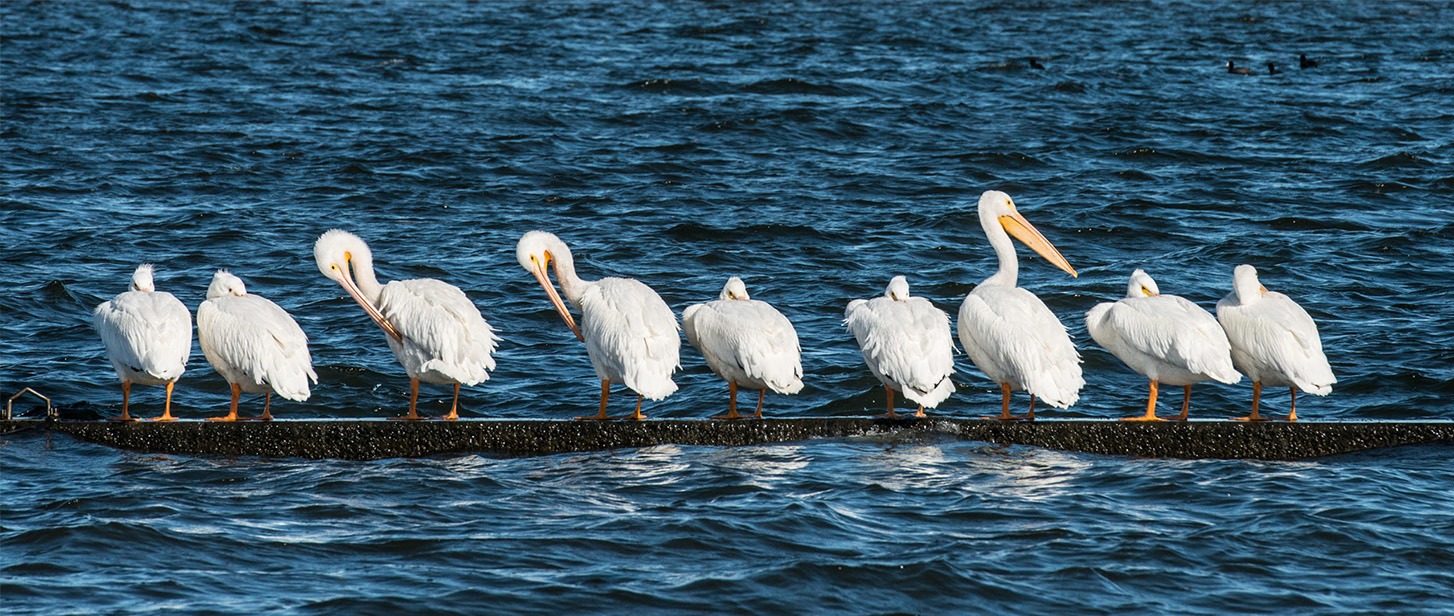

American White Pelicans in the San Joaquin River Delta. Florence Low, California Department of Water Resources.
Good Water Quality is Essential for a Healthy Estuary

Water quality is the foundation of a healthy ecosystem in every part of the Estuary, from the smallest streams to the most expansive tidal marshes. Animals and plants that live in the water are highly sensitive to changes in salinity, water temperature, dissolved oxygen, and contaminants. Impacts on small organisms cascade up the food chain, disrupting aquatic and terrestrial habitats. Clean water is essential for Quality Habitat and Thriving Communities alike, ensuring that people and wildlife can thrive in the Estuary as they have for generations.
Indicators
Clean Water

Freshwater Flow
Measures the amounts, timing, and variability of fresh water flowing into the Estuary compared to the flows that would have occurred without dams and water diversions

Harmful Algal Blooms
Tracks indirect measures of harmful algae concentrations via measurements such as chlorophyll, toxin, and nutrient concentrations (Under development)

Safe for Aquatic Life
Assesses concentrations of toxic pollutants in water and fish from the Bay
Protecting Water Quality in a Changing Landscape
When clean water flows through the Estuary, it drives abundant sources of food and healthy habitats that allow wildlife populations to thrive. Vital habitats such as marshes, wetlands, and eelgrass beds rely on high-quality fresh and salty water. Low freshwater flow into the Estuary, limited by water diversions, dams, and other human uses upstream, threatens the balance of salt and nutrients.
Expanded research, monitoring, and real-time tracking of water quality and freshwater flows are pivotal for addressing current and emerging threats to the Estuary’s health. Upstream, restoration and pollution prevention are critical for ensuring clean freshwater continues to flow through the Estuary.