
About the State of Our Estuary
State of Our Estuary uses the best available scientific information on clean water, healthy ecosystems, and thriving communities to assess the health of the San Francisco Bay and Delta

Aerial view of the San Joaquin River and Hog Island. California Department of Water Resources.
Our Approach
Ensuring Information Integrity
The analysis and summaries of the State of Our Estuary are developed by dozens of scientists collaborating with government agencies to synthesize the best available science and communicate it in the most useful way possible for managers and anyone else concerned with the health of the Bay and Delta. The information developed by the Contributing Scientists goes through multiple stages of review by members of the Science Review Team and the Core Team.
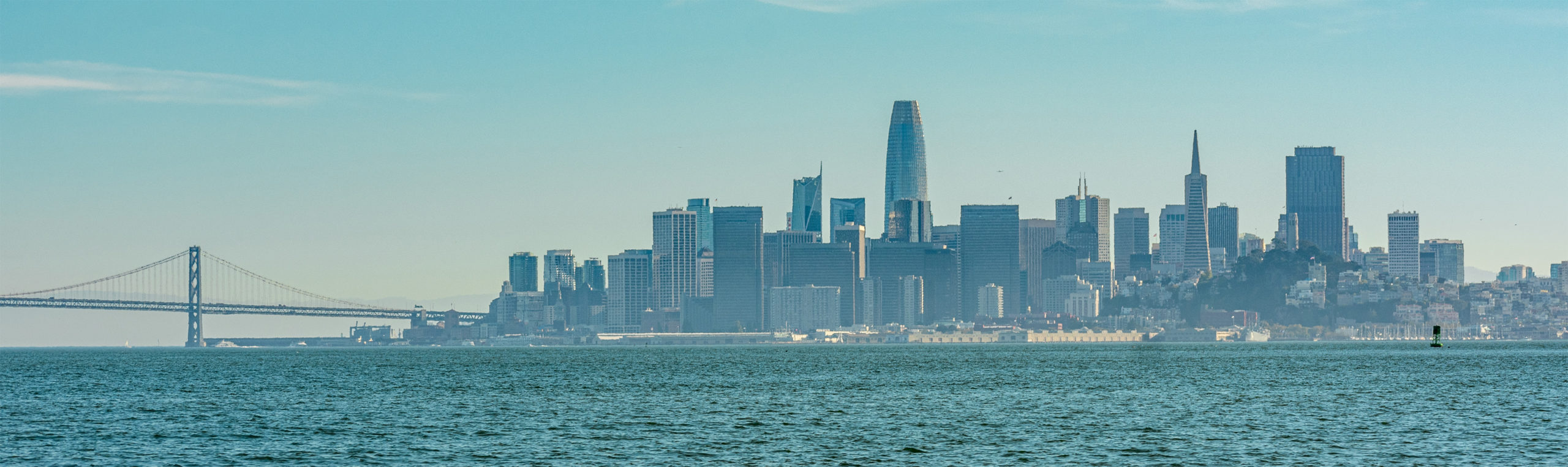
View of the downtown San Francisco waterfront. Alex Braud, SFEI.
History of the State of Our Estuary
The effort to develop a consistent, accessible approach to report on the health of the Estuary was paired with work to set regional goals for the conservation and restoration of the Estuary, such as the Estuary Blueprint and Baylands Ecosystem Habitat Goals. The State of Our Estuary helps monitor progress towards those goals.
A Timeline of Science-Informed Management for the San Francisco Estuary
1992
First Comprehensive Conservation and Management Plan for the Estuary, including a State of the Estuary chapter, published by the Estuary Partnership
1998
First Pulse of the Estuary on water quality monitoring is published by San Francisco Estuary Institute (SFEI)
2003
Ecological Scorecard is published by The Bay Institute
2010
Subtidal Habitat Goals Report is published by the California Coastal Conservancy and Ocean Protection Council, National Oceanic and Atmospheric Administration Fisheries Service and Restoration Center, San Francisco Bay Conservation and Development Commission, and the San Francisco Estuary Partnership
2015
First State of the Estuary is published
2022
Restoring the Estuary – A Framework for the Restoration of Wetlands and Wildlife in the San Francisco Bay Area is published by San Francisco Bay Joint Venture
1987
Congress establishes the National Estuary Program. The same year, the United States Environmental Protection Agency names San Francisco Estuary an Estuary of National Significance
1996
A “Conceptual Framework for Choosing Indicators of Ecological Integrity: Case Study of the San Francisco Bay–Delta–River System” is published, authored by the Bay Institute, UC Berkeley, and Environmental Defense Fund
1999
First Baylands Ecosystem Habitat Goals is published, representing the work of more than a hundred scientists and managers
2004
Development of Environmental Indicators of the Condition of San Francisco Estuary is prepared for SFEP by SFEI, the Bay Institute, and Center for Ecosystem Management and Restoration
2011
State of San Francisco Bay is published by the San Francisco Estuary Partnership
2019
State of the Estuary update is published
2025
State of Our Estuary debuts online
1987
Congress establishes the National Estuary Program. The same year, the United States Environmental Protection Agency names San Francisco Estuary an Estuary of National Significance
1992
First Comprehensive Conservation and Management Plan for the Estuary, including a State of the Estuary chapter, published by the Estuary Partnership
1996
A “Conceptual Framework for Choosing Indicators of Ecological Integrity: Case Study of the San Francisco Bay–Delta–River System” is published, authored by the Bay Institute, UC Berkeley, and Environmental Defense Fund
1998
First Pulse of the Estuary on water quality monitoring is published by San Francisco Estuary Institute (SFEI)
1999
First Baylands Ecosystem Habitat Goals is published, representing the work of more than a hundred scientists and managers
2003
Ecological Scorecard is published by The Bay Institute
2004
Development of Environmental Indicators of the Condition of San Francisco Estuary is prepared for SFEP by SFEI, the Bay Institute, and Center for Ecosystem Management and Restoration
2010
Subtidal Habitat Goals Report is published by the California Coastal Conservancy and Ocean Protection Council, National Oceanic and Atmospheric Administration Fisheries Service and Restoration Center, San Francisco Bay Conservation and Development Commission, and the San Francisco Estuary Partnership
2011
State of San Francisco Bay is published by the San Francisco Estuary Partnership
2015
First State of the Estuary is published
2019
State of the Estuary update is published
2022
Restoring the Estuary – A Framework for the Restoration of Wetlands and Wildlife in the San Francisco Bay Area is published by San Francisco Bay Joint Venture
2025
State of Our Estuary debuts online