
Native Fish
Measures the abundance, species diversity, species composition, and distribution of native fishes in the San Francisco Estuary

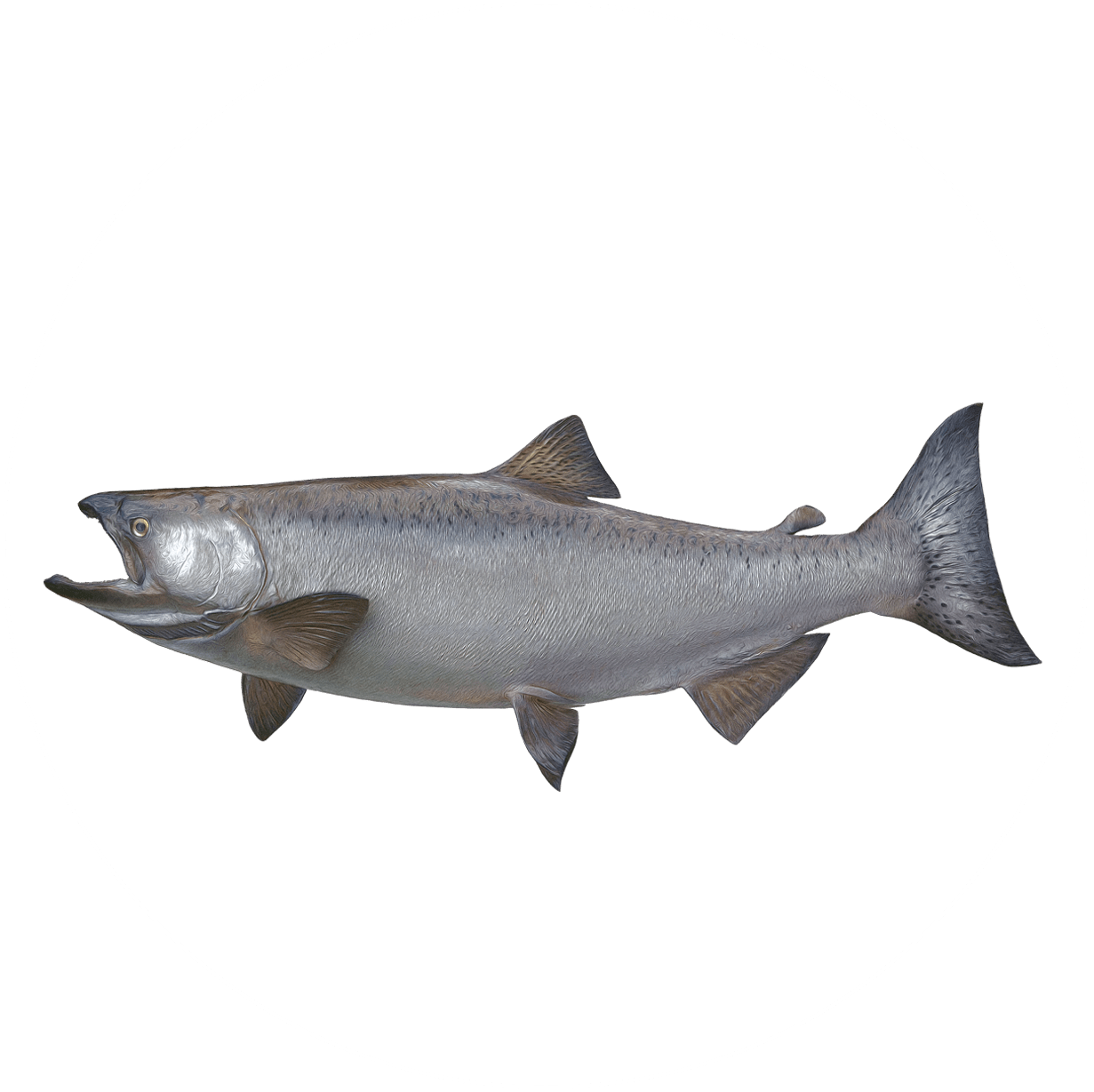
Chinook salmon.
The Native Fish Indicator Reflects the Estuary’s Capacity to Support Native Aquatic Life

The San Francisco Estuary is home to more than 100 fish species, including commercially important fish such as salmon, popular sport fish like sturgeon, and imperiled Estuary-dependent species such as delta smelt. Higher abundance and species diversity of native fishes indicate healthy habitats and ecological processes, while declines may signal habitat loss, degraded water quality, or other environmental changes.
Native Fish
Status & Trend
Latest Update: October 2025


The native fish community in the Bay is generally stable and in Good condition. In contrast, the fish community in Suisun Bay and the Delta is in Poor condition, and has been fairly stable in recent decades following a major decline in the 1980s. Some localized improvements in native fish abundance in nearshore and wetland channel habitats of the Delta suggest the potential for freshwater outflow and habitat restoration to improve conditions. However, the broader native fish community in the Delta remains degraded because human-caused alterations have reduced the system’s capacity to support native aquatic life.

Full read
Native Fish in Depth
In recent years, results have shown Good and stable conditions for native pelagic (found higher in the water column) and demersal (found lower in the water column) fishes in open-water Bay habitats. In contrast, conditions remain Poor in the open-water, littoral, and wetland regions of the Delta and Suisun Bay. However, shoreline surveys have shown recent improvements in native fish abundance in the nearshore “beach zone” of the Delta in 2023, a wet year following several drought years. This suggests that, despite Delta fish doing poorly overall, some populations may still have enough resilience to respond positively to favorable conditions, such as increased freshwater inflow and wetland restoration.
The native fish communities of the Bay and Delta were assessed using different long-term monitoring surveys. The Bay fish community was sampled with trawls that collected fish in open water habitats (pelagic and benthic), so the current Bay Fish Index doesn’t include fish using shoreline or wetland habitats. As wetland restoration in the Bay expands, future iterations of the indicator will aim to incorporate new Bay wetland fish monitoring survey data. The Delta Fish Index, by contrast, includes both open-water and nearshore “beach zone” habitats, as well as Suisun Marsh, reflecting conditions in the littoral zone and wetlands, as well as offshore areas.
Stressors such as declining freshwater inflow, invasive species, pollution, and extreme weather events are major stressors likely reducing fish survival, particularly in the Delta (Sommer et al. 2007; Light and Marchetti 2007). Water diversions and altered flow regimes continue to impact fish distributions and abundance (Jassby et al. 1995; Kimmerer 2002). Additionally, warming temperatures, changing salinity levels, and increased harmful algal blooms pose growing threats to fish populations.
Efforts to support native fish populations include wetland restoration, flow management, pollution reduction, conservation culture programs, and Endangered Species Act protections. The Bay and Delta restoration initiatives aim to improve habitat conditions, but large-scale ecosystem recovery remains complex due to competing water demands and uncertain future weather scenarios. Despite targeted interventions, challenges persist. Water diversions, habitat fragmentation, and competition and predation by non-native species continue to pressure native fish populations. The interplay between hydrodynamics, food web shifts, and environmental stressors makes it difficult to reverse long-term declines without comprehensive, system-wide management.
Estuarine fish are impacted by many features of the Estuary, including water quality, freshwater flows, and habitat condition, which together shape the ecological health of the Bay-Delta Estuary for native species. Long-term declines in native fish abundance mirror broader environmental trends, reinforcing the need for coordinated, science-based management. Future efforts aim to include additional data on fish in wetland habitats across the Estuary, provided by the Wetlands Regional Monitoring Program.
How was this Indicator Calculated?
Data Used
The Bay and Delta Fish Indices use long-term monitoring data from the San Francisco Bay Study (SFBS), Fall Midwater Trawl Survey (FMWT), Delta Juvenile Fish Monitoring Program Beach Seine Survey (DJFMP), and UC Davis Suisun Marsh Fish Survey (SMFS) to calculate standardized metrics for native fish across estuarine sub-regions. These long-term datasets are produced by the Interagency Ecological Program.
Indicator Approach
The Native Fish Indicator assesses status and trends in native fish abundance, species diversity, species composition, and distribution across the San Francisco Estuary. Each metric is scored by comparing recent data with historical (e.g., 1980s) values and then aggregated separately into two regional indices. The Bay Fish Index focuses on pelagic and demersal species in open-water habitats of South Bay, Central Bay, and San Pablo Bay. The Delta Fish Index focuses on pelagic, demersal, littoral, and wetland species in the Delta and Suisun Bay subregions.
Benchmarks and Scoring
For abundance metrics, the SFBS, FMWT, and SMFS used mean abundance from 1980-1989 as a reference period for scoring, and the DJFMP used the period from 1995-2004. For species diversity, composition, and distribution metrics, percentages based on professional judgement were used to assign each metric to a score ranging from 0 to 4, representing conditions from “Very Poor” to “Excellent” for several subregions of the Estuary. Subregional scores were then aggregated into a Bay Fish Index (San Pablo Bay, Central Bay, South Bay) and Delta Fish Index (Suisun Bay, Delta) to represent regional differences. To determine trends, we assessed changes in status scores from the previous reporting period.
Technical Appendix

Download PDF
Related Indicators
Flourishing Wildlife Category

Harbor Seals
Tracks adult harbor seal abundance in the San Francisco Bay during the breeding season (Under development)
Ridgway's Rail
Tracks Ridgway’s Rail population density in tidal marsh habitats of the San Francisco Bay (Under development)

Shorebirds
Tracks winter densities of migratory shorebirds in the San Francisco Bay
Tidal Marsh Birds
An index of breeding population density for three tidal marsh bird species in the San Francisco Bay

Waterfowl
An index of winter abundance for dabbling and diving ducks in the San Francisco Bay
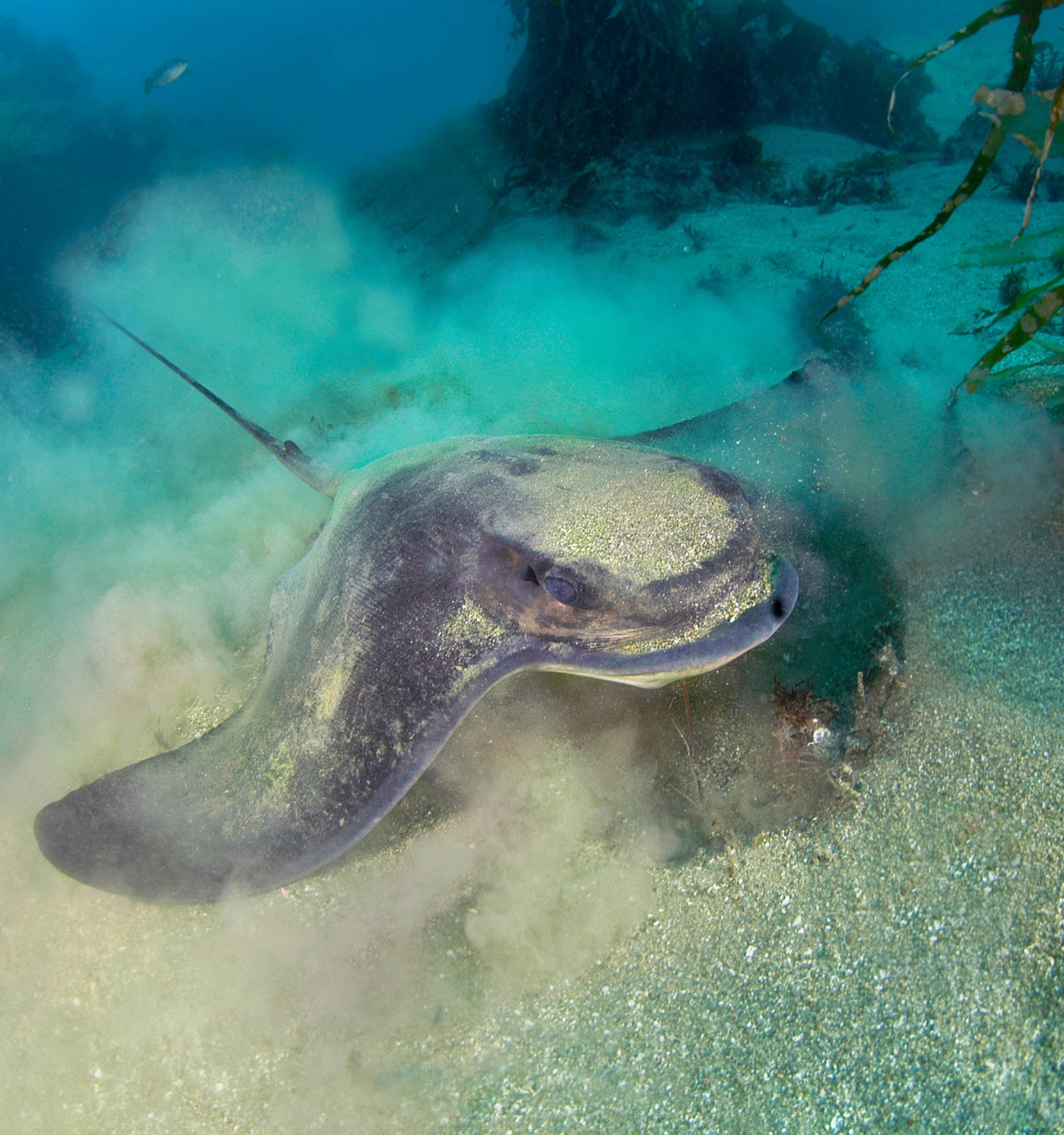
California Bat Rays are common in marine and estuarine wetland habitats. They feed primarily on benthic invertebrates in marine and brackish wetlands across the lower Estuary. During summer months, bat rays give birth in brackish wetlands of the lower Estuary. Jim Ervin, OGFL.
Contributing Scientists | Native Fish
Levi S. Lewis, PhD, University of California – Davis
James A. Hobbs, PhD, University of California – Davis
Indicator originally developed by: Christina Swanson, PhD, Jon Rosenfield, PhD, Alison Weber-Stover, PhD, and William Bennett, PhD (The Bay Institute)
Citations
-
Sommer, T., C. Armor, R. Baxter, R. Breuer, L. Brown, M. Chotkowski, S. Culberson, F. Feyrer, M. Gingras, B. Herbold, W. Kimmerer, A. Mueller-Solger, M. Nobriga, and K. Souza. 2007.
“The Collapse of Pelagic Fishes in the Upper San Francisco Estuary.” Fisheries 32:270-277. -
Light, T. and M.P. Marchetti. 2007.
“Distinguishing between Invasions and Habitat Changes as Drivers of Diversity Loss among California’s Freshwater Fishes.” Conservation Biology 21:434–446. -
Jassby, A. D., W. J. Kimmerer, S. G. Monismith, C. Armor, J. E. Cloern, T. M. Powell, J. R. Schubel, and T. J. Vendlinski. 1995.
“Isohaline Position as a Habitat Indicator for Estuarine Populations.” Ecological Applications 5:272-280. -
Kimmerer, W. J. 2002.
“Physical, Biological, and Management Responses to Variable Freshwater Flow into the San Francisco Estuary.” Estuaries 25:1275-1290.