
Thriving Communities
The Estuary provides opportunities for people to connect with nature by swimming, fishing, walking, and observing wildlife. In turn, people are inspired to care for the Estuary when they can be active stewards of the ecosystem.


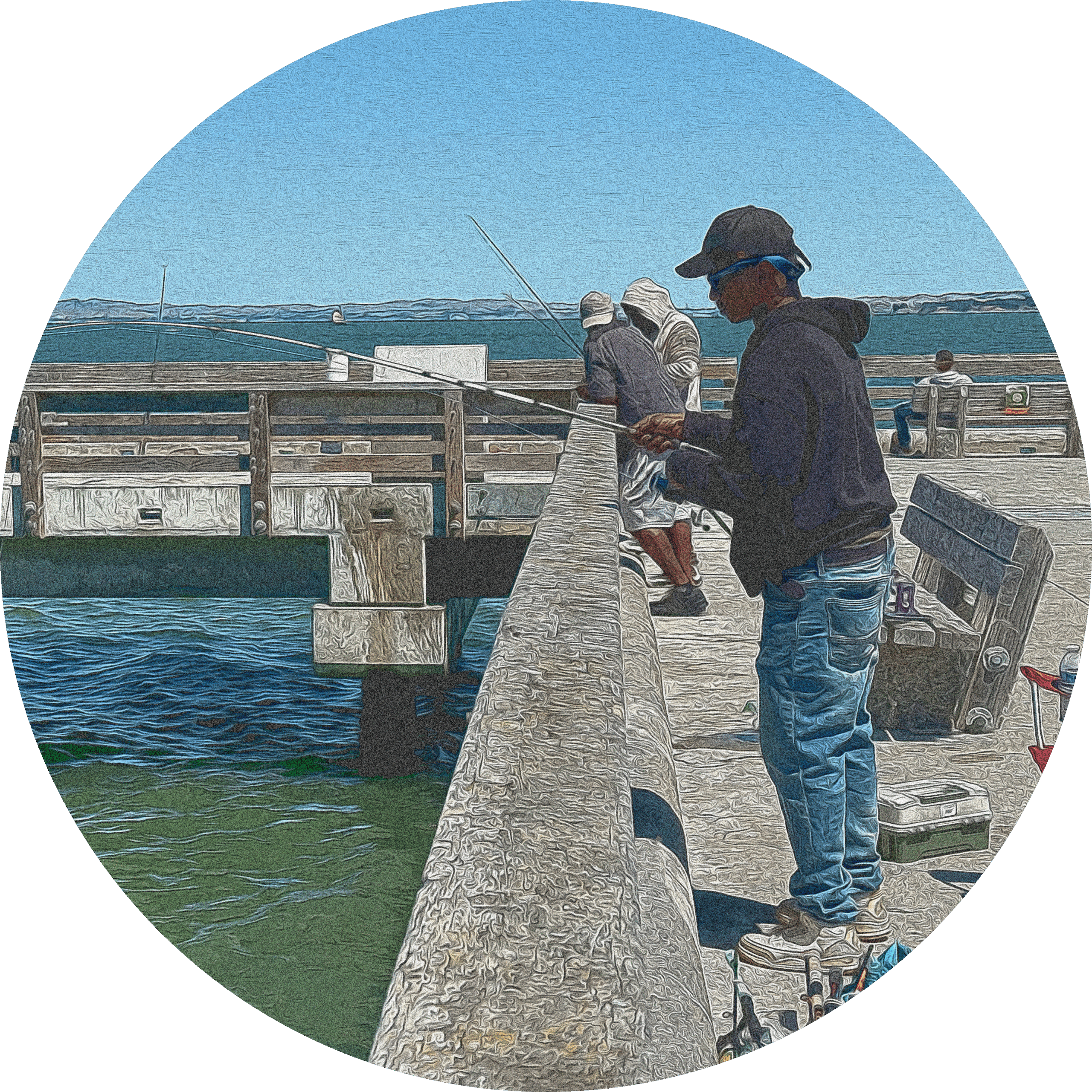
People fishing in the Bay. Shira Bezalel, SFEI.
Healthy People and a Healthy Estuary are Connected

There are deep connections between the health of the Estuary and its residents. A flourishing estuary provides clean water for swimming and fishing, and beautiful places to exercise, relax, and educate children about nature. Updated indicators measure whether water is safe for swimming and fish are safe for eating. Indicators still in development will measure whether there is broad participation in decisions about restoration in the Estuary, whether education opportunities are available to everyone, and how easily people can access nature.
The sounds and sights of wildlife and water, the different colors of plants across seasons, and the fresh air. Access to wetlands lets people understand that we are not only beneficiaries of wetlands, we are dependent on them.
Indicators
Thriving Communities


Access to Nature
Evaluates how access to parks, trails, and open space is distributed across the Estuary (Under development)
Wetland Decision-Making
Evaluates participation in restoration decision-making (Under development)
Safe for Eating
Measures concentrations of toxic contaminants (mercury and polychlorinated biphenyls, or PCBs) in fish from the Estuary

Safe for Swimming
Reflects the level of pathogens (microscopic organisms that can cause illness) in Estuary water
Shoreline Recreational Use
Tracks visitor numbers and activity types in shoreline parks (Under development)
Stewardship & Learning
Tracks the levels of participation in shoreline stewardship and education programs (Under development)
Sharing the Estuary’s Benefits to Create a More Resilient Future
Past and present decisions in planning and government have impacted how people interact with the Estuary, including where and how communities access the benefits that the Estuary can provide. Ensuring all residents of the Estuary have access to environmental education opportunities, green space, water that is safe to swim in, and fish that are safe to eat requires involvement by residents in management.